Destination
Antalya
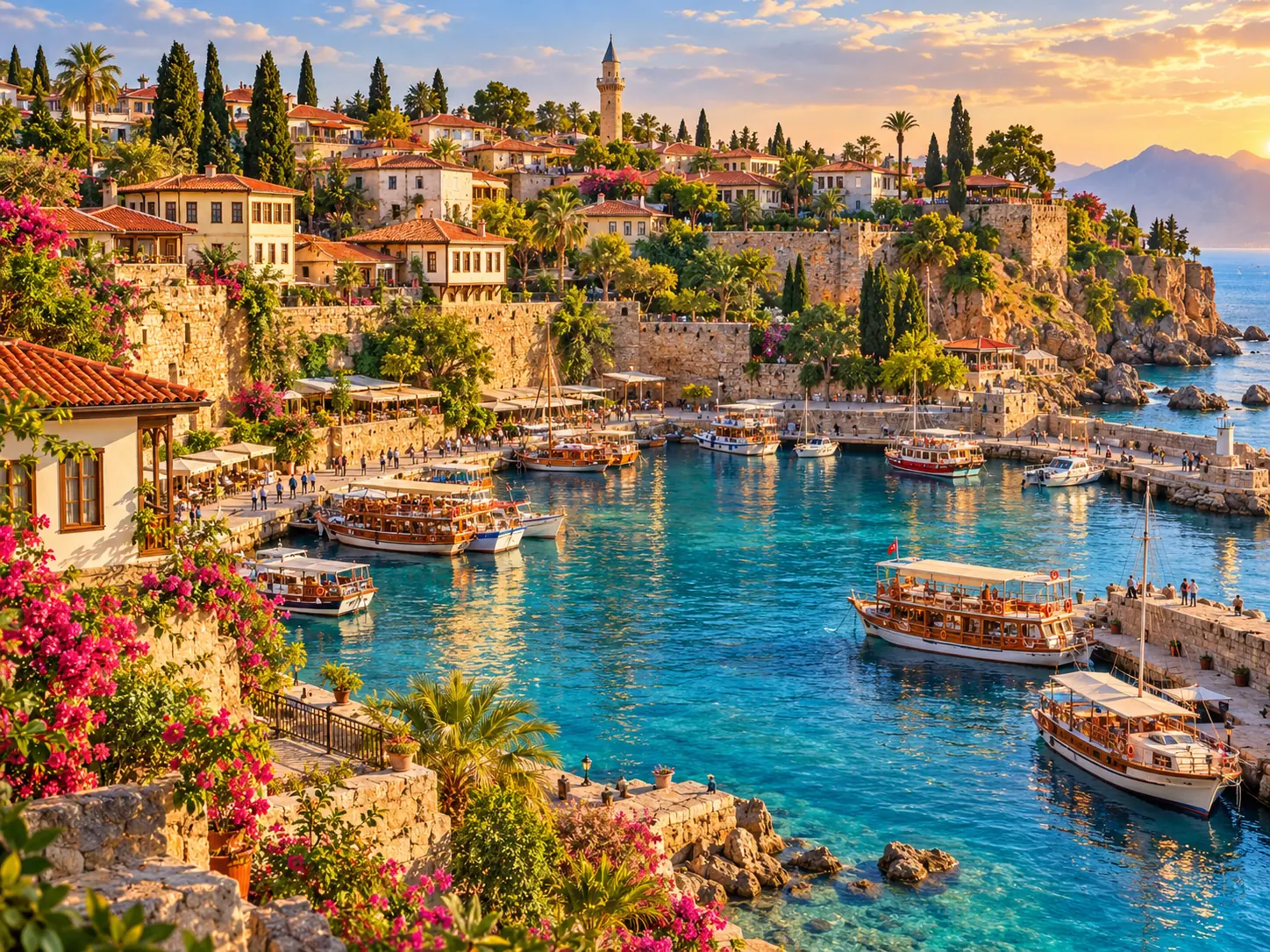
Antalya is rewarding to explore through Kaleiçi, the historic quarter around the old harbour, where a walk repeatedly returns to the sea. Different periods share the same urban route: Roman Hadrian's Gate and the Seljuk Yivli Minaret. A satisfying visit need not become a daily expedition along the entire coastline. We suggest three days with distinct purposes: the old centre, one chosen coastal area and an ancient city outside Antalya. This is our editorial itinerary for an independent visit. With two days, omit the excursion; a holiday centred on daily swimming needs more unstructured time and a different accommodation priority.
When to go
For a walking itinerary, we would choose spring or autumn and assess the particular week against its forecast. In summer, put exposed ruins early in the day, followed by shade and a substantial break. A beach day is not automatically a restful interlude if it means hours in direct sun.
For winter travel, keep the city day central and the excursion flexible. Check the seasonal visiting arrangements for each site. A smaller Kaleiçi museum is a more useful rainy-day alternative than trying to preserve a long outdoor itinerary regardless of conditions.
Things to see and do
Begin day one at Hadrian's Gate, then walk through Kaleiçi towards the harbour and Yivli Minaret. Give the Ethnographic Museum its own stop: its two Ottoman mansions introduce cultural objects and everyday life. Keep the evening for a return to the water and dinner without another obligatory transfer.
On day two, choose Konyaaltı to the west or a walk to Lower Düden to the east. Konyaaltı is predominantly pebbly; Lower Düden falls from the cliffs directly into the sea. These are different coastal areas, so make one the priority instead of connecting swimming and the waterfall with a rigid timetable.
Give day three to Perge, where colonnaded streets, baths and public spaces reveal an ancient city's structure. At review, its theatre was closed for restoration while the wider site admitted visitors. If theatre architecture is your main interest, consider Aspendos instead, which also has a surviving aqueduct. One substantial archaeological excursion is enough for a short visit.
Practical tips
On 2 November 2026, the official listing marks Antalya Archaeological Museum as closed. Do not build a day around it or use an older guidebook as proof of access; check its status again before a future trip. The Ethnographic Museum in Kaleiçi is a separate institution, so use the full name when searching.
For ruins, bring water, sun protection and shoes with grip. In Kaleiçi, assess steps and the descent to the harbour, especially with a stroller. Stay on designated visitor areas at the waterfall. Follow entrance instructions at mosques: viewing the minaret and entering a prayer space need separate consideration.
Getting there and getting around
Antalya Airport has bus and AntRay tram connections; the airport operator identifies links with the city centre and intercity bus terminal. Before booking a transfer, establish your arrival terminal, accommodation address and suitable stop. The name Antalya covers much more ground than the walkable historic centre.
The airport directs travellers to the Antalyakart application for schedules. Check the actual evening connection and allow time to change, instead of trusting a universal journey estimate. For Perge or Aspendos, arrange the complete outward and return journey; the urban tram network alone does not provide a finished plan to each monument's entrance.
Where to stay
For a first short visit, we would choose Kaleiçi if walking after dinner matters most. Compare Konyaaltı if regular beach time is the priority. Location affects daily transfers more than a small difference in room size. These recommendations follow our itinerary and are not inspections of individual hotels.
Clarify vehicle access, the route with suitcases, stairs and the room's position relative to evening venues. For a beach stay, inspect the actual approach to the shore and any road crossings. We suggest choosing the right section of the city first, then comparing properties by how comfortably you can return each evening.
What to try
Antalya piyaz combines beans with a tahini-based sauce; try it with şiş köfte. The tourism portal also highlights yanık dondurma as a local sweet speciality. This is enough for an introductory lunch: understanding one characteristic combination is more enjoyable than ordering several heavy dishes just to collect their names.
Ask about ingredients, including sesame and possible egg in piyaz, if you have dietary restrictions. Sauces vary between establishments. We suggest alternating these meals with simpler orders and checking menus before sitting down around the harbour. A sea view is a separate reason to choose a restaurant, rather than evidence about the cooking.
Similar destinations

Türkiye
Alaçatı
Alaçatı works well as a small base for the Çeşme Peninsula: its historic centre is separate from Ilıca beach to the nor…
View details
Türkiye
Gaziantep
In Gaziantep, food shapes a good itinerary as much as museums: the city belongs to UNESCO's Creative Cities Network for…
View details
Türkiye
Cappadocia
Cappadocia is a region rather than one city. Erosion has shaped volcanic rock into valleys and pinnacles among survivin…
View details
Türkiye
Konya
Konya rewards a gradual introduction: Rumi's legacy first, Seljuk architecture next, and a separate excursion to Sille.…
View details