Destination
Heidelberg
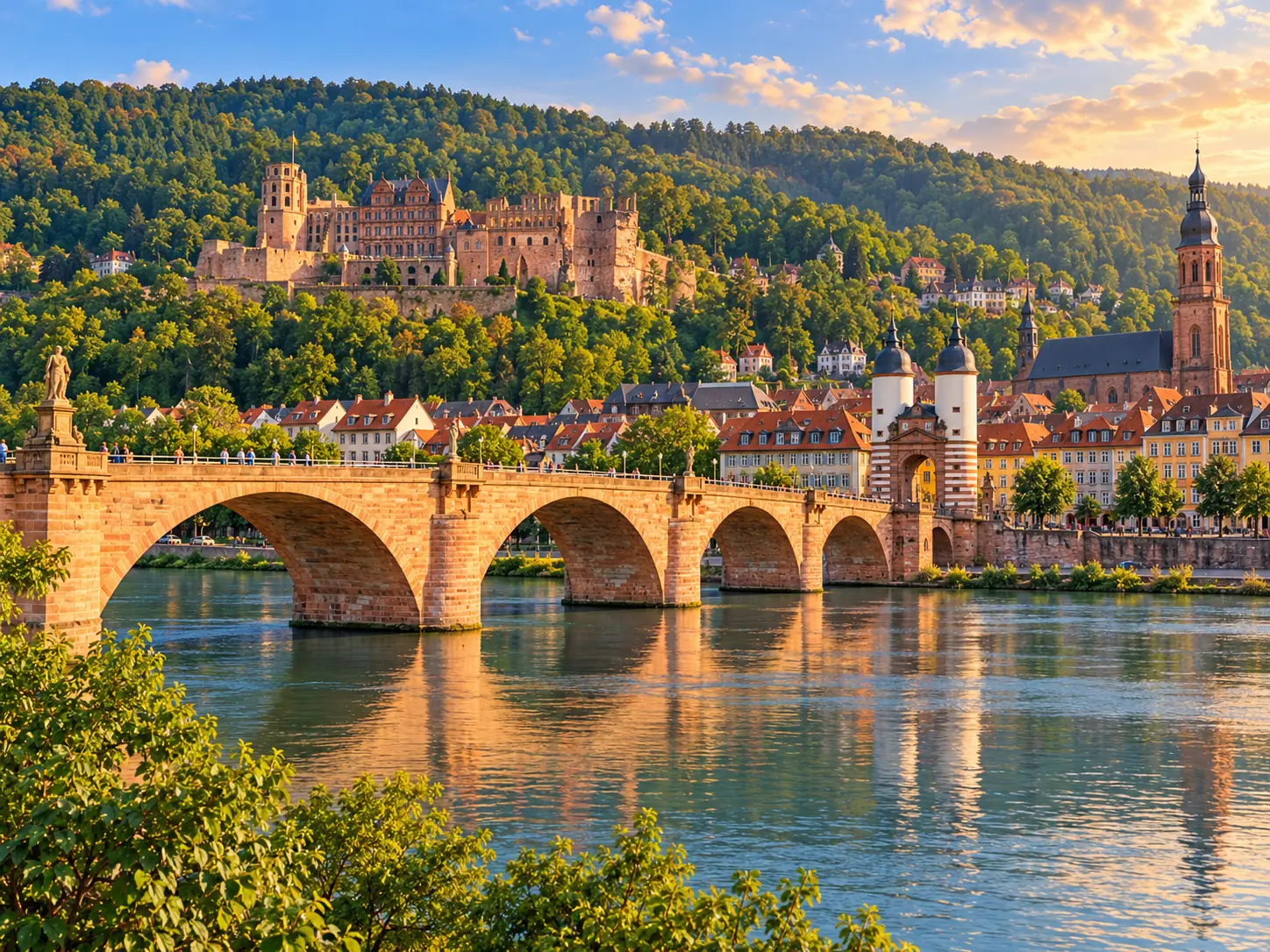
Heidelberg is particularly rewarding when the castle view becomes the starting point for exploring both sides of the Neckar. The university streets, river crossing and wooded slopes offer three different scales of the same city. Our suggested visit takes two full days, with a third available for a longer hilltop outing. Keep the programme flexible around visibility and museum access. A clear morning is a good opportunity for a panorama; a wet afternoon can suit the university collections. You do not need to turn every slope into a hike to enjoy the relationship between city and landscape.
When to go
For this itinerary, we would favour spring or early autumn, when outdoor walking can occupy a substantial part of the day. That is editorial advice; consult the actual forecast before committing to an uphill route. In summer, take water and move the more strenuous walking earlier.
In winter, plan viewpoints during daylight and confirm the last downhill connection before ascending. The funicular changes to its winter timetable on 2 November 2026. Keep café and museum time between outdoor sections instead of extending a hill walk into darkness.
Things to see and do
On day one, begin in the old town, then head to Kornmarkt for the castle ascent. Explore the courtyard and terraces, and visit the Great Tun, an enormous historic wine barrel. Give the German Pharmacy Museum its own attention rather than treating it as a corridor on the way out. Descend for an unhurried evening meal.
Use day two for the university area and the Old Bridge. The University Museum is an indoor option; the Student Prison requires its own access check. Cross the Neckar and, if conditions and fitness suit, continue to the Philosopher's Walk for the view back towards the castle. Otherwise, enjoy the river at a lower level.
A third day can take you to Königstuhl, using the two funicular sections with a change at Molkenkur. Make the hilltop the main activity, with a short walk chosen for the conditions. For a two-day trip, we would omit this extension rather than rush the castle and opposite riverbank into one afternoon.
Practical tips
Castle interiors require a guided tour, charged separately from basic admission. The standard castle ticket includes the lower funicular, courtyard, Great Tun and Pharmacy Museum; check the ticket scope before adding a summit journey.
As checked on 2 November 2026, the Student Prison is closed from 2 to 6 November, while the University Museum remains open. Their schedules are distinct. Check the particular collection page, not an old combined timetable. For the Pharmacy Museum, published seasonal hours differ between official pages; use the museum's own current information when planning the final entry of the day.
Getting there and getting around
Heidelberg Hauptbahnhof connects with regional and longer-distance trains, but arrival there is not arrival in the old town. Continue by the appropriate local tram or bus and check the walking section to your accommodation.
Frankfurt Airport is a practical gateway: the official tourism office describes a rail journey via Mannheim. Search for your actual flight date and leave a connection buffer. For the castle, distinguish Kornmarkt, the castle stop and Molkenkur from the upper journey to Königstuhl. A ticket or map mentioning the mountain railway does not automatically include every section you wish to ride.
Where to stay
Our suggested base is the Altstadt for evenings and early castle access. Compare the area near Bismarckplatz if straightforward onward transport matters, or Neuenheim if you would like to start and end the day across the river. These are editorial choices, not promises of quiet streets or inspected accommodation.
Check whether a historic property has stairs, a lift and a practical luggage drop. A castle view can come with a less convenient walking route. Before paying extra for the setting, trace the journey from the station to the actual front door, particularly for a late arrival.
What to try
Regional menus may include Baden-style Sauerbraten with Spätzle, or a Palatinate platter with blood and liver sausages. Local wines offer another connection with the surrounding region if you drink alcohol. Choose one substantial regional meal and keep the other food stops lighter during a walking day.
Our advice is to inspect menus in the side streets as well as the main pedestrian route. Ask what accompanies a dish and whether a vegetarian option uses meat stock. A bakery breakfast or café pause leaves room to enjoy the old town without making every stop a formal restaurant booking.
Similar destinations

Germany
Berlin
Berlin brings together German history, museums, residential neighbourhoods and walks beside the river. For a first visi…
View details
Germany
Hamburg
Plan Hamburg around its water: give the warehouses and harbour their own day, then make separate time for the Alster, a…
View details
Germany
Dresden
Dresden brings together several sides of the city on the Elbe: Old Town architecture, museum collections and everyday l…
View details
Germany
Düsseldorf
Düsseldorf works well as a city break built around three different pleasures: looking at art, walking beside the Rhine …
View detailsOfficial sources
- heidelberg-marketing.de
- schloss-heidelberg.de
- schloss-heidelberg.de
- deutsches-apotheken-museum.de
- deutsches-apotheken-museum.de
- heicollections.uni-heidelberg.de
- heicollections.uni-heidelberg.de
- heidelberg-marketing.de
- bergbahn-heidelberg.de
- bergbahn-heidelberg.de
- heidelberg-marketing.de
- heidelberg-marketing.de