Destination
Évora
Évora suits two days on foot, staying within or near the old city walls. Its Roman temple, medieval cathedral, university and houses along narrow streets can be explored as parts of one connected town. The historic centre has been on UNESCO's World Heritage List since 1986; beyond it lie other routes through the Alentejo. Our plan starts with central squares and two substantial interiors, then turns to the university and aqueduct. Return to Praça do Giraldo in the evening without a museum agenda. A third day can include the Almendres megaliths. Arrange transport separately for that outing; the town days can revolve around walking and a long lunch.
When to go
For this route, we would choose spring or autumn. In summer, walk in the morning and reserve the middle of the day for a museum and lunch. Avoid putting a countryside outing immediately after several hours in open streets. In winter, reduce evening stops and check last admission at the cathedral and São Francisco complex.
The Frei Manuel do Cenáculo Museum closes on Mondays; tourist visits to the university college are unavailable on Sundays and public holidays. For a weekend stay, put the university on Saturday.
Things to see and do
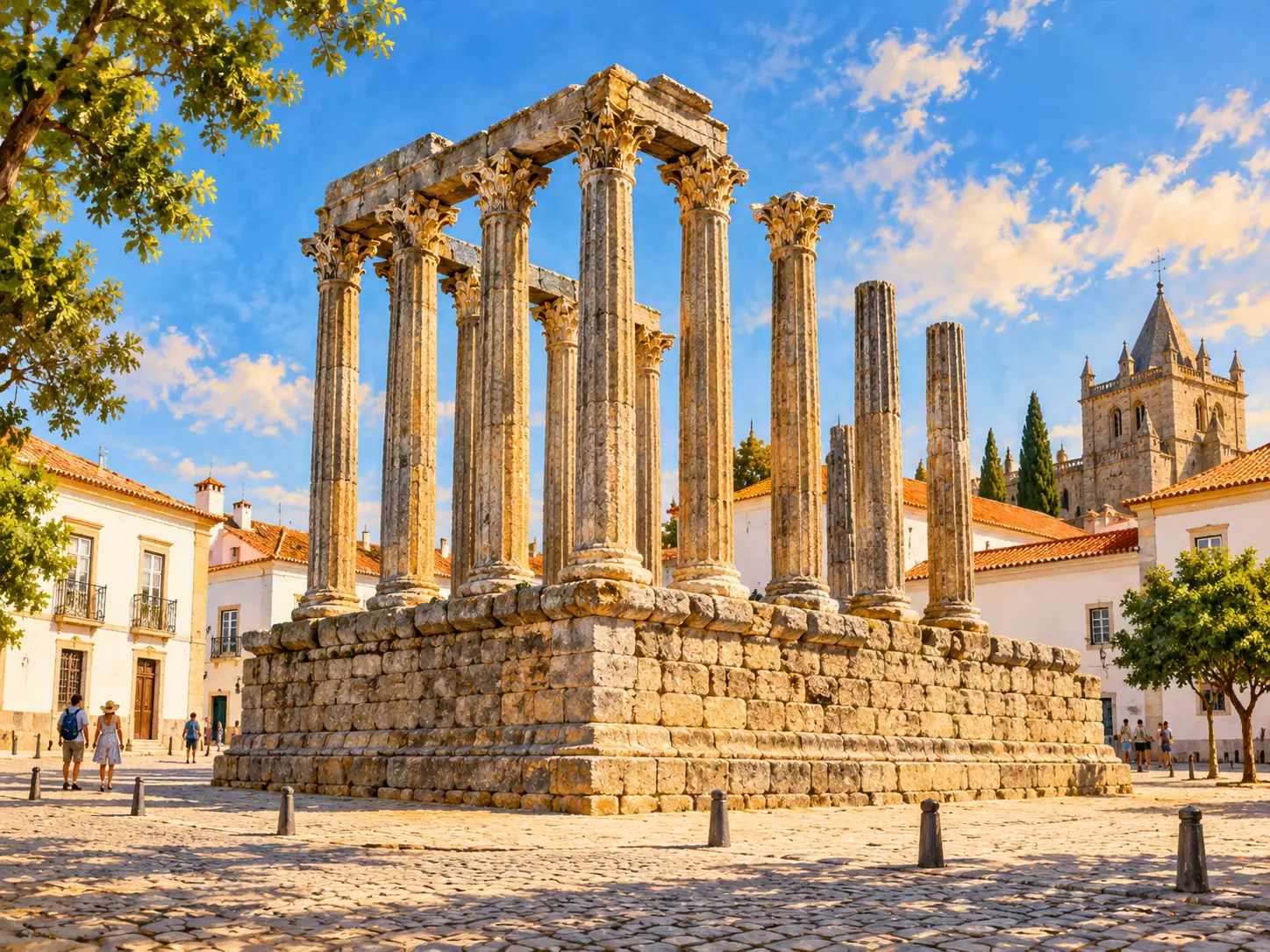
Start day one at Praça do Giraldo and follow Rua 5 de Outubro to the cathedral. Allow time for the cloister and church interior before continuing to the Roman temple. This first-century building was probably associated with imperial worship; its familiar name, Temple of Diana, does not establish dedication to that goddess. After lunch, visit the Frei Manuel do Cenáculo Museum. A highlight is the Flemish altarpiece depicting the Virgin's life, originally from the cathedral.
Begin day two at Colégio do Espírito Santo, associated with the university's foundation in 1559. Continue through central streets to São Francisco. The seventeenth-century Chapel of Bones uses human remains to prompt reflection on life's transience. Afterwards, take a break in the public garden. After lunch, walk towards Rua do Cano and the urban section of the Água da Prata aqueduct, inaugurated in 1537. There is no need to follow the entire water route.
On day three, visit Almendres separately. The stone circle and solitary menhir are distinct stops; agree the route with a driver or guide. After returning, fit in an interior you missed because of a closure day.
Practical tips
At São Francisco, the church itself is free to visit; the Chapel of Bones and museum spaces share an admission ticket. This private religious complex does not automatically apply state museum concessions. Establish which spaces you wish to see before buying.
The cathedral has steps and changes of level. If mobility matters, discuss the entrance and intended sections individually. At Almendres, use the designated approaches and avoid climbing the stones. For an independent trip, check the access road beforehand and establish your return arrangements.
Getting there and getting around
CP Intercidades trains and Rede Expressos coaches connect Lisbon with Évora. Check the departure station or coach terminal on your chosen ticket, and plan the return journey before booking your final visit. If flying into Lisbon, allow separately for the transfer to the appropriate onward transport.
Évora railway station is outside the historic centre; the municipality suggests roughly twenty minutes on foot as a guide. The coach terminal on Avenida Túlio Espanca is closer to the centre. With luggage, we would go to the accommodation first. For Almendres, arrange a car journey or guided outing instead of extending a walk after the town's museums.
Where to stay
For a first stay, look between Praça do Giraldo and the cathedral so that morning visits and evening meals need no separate transport arrangements. Consider the Rua do Cano area if you want the aqueduct to be part of your daily walks.
With a car, also consider places just outside the walls, especially for countryside trips. Ask whether parking is included and where luggage can be unloaded. In an older building, check steps before the lift and the route to your room. For a short stay, we would favour a convenient location over a larger room requiring another daily journey.
What to try
Try Alentejo-style açorda: bread in hot broth with aromatic ingredients, rather than necessarily a uniform thick mixture. Migas also use bread, but it is soaked and mashed. Choose one and ask which meat, fish or other ingredients appear in that day's version.
Local options include matured Queijo de Évora with protected designation of origin and convent sweets such as pão de rala. We would share a cheese starter if a main course follows, saving a sweet for coffee later.
Similar destinations

Portugal
Coimbra
Coimbra is a city to understand vertically: the university's Alta stands above the shopping streets of the Baixa, with …
View details
Portugal
Lisbon
Lisbon works well as a series of neighbourhood walks: the Baixa's shopping streets, Alfama's hills, Chiado's cafés and …
View details
Portugal
Ponta Delgada
Ponta Delgada is a city on São Miguel, rather than the name of the entire Azores archipelago. Its harbour, old squares …
View details
Portugal
Porto
A Porto walk repeatedly changes level: from São Bento station and central streets, you descend to Ribeira, then see the…
View details