Destination
Bamberg
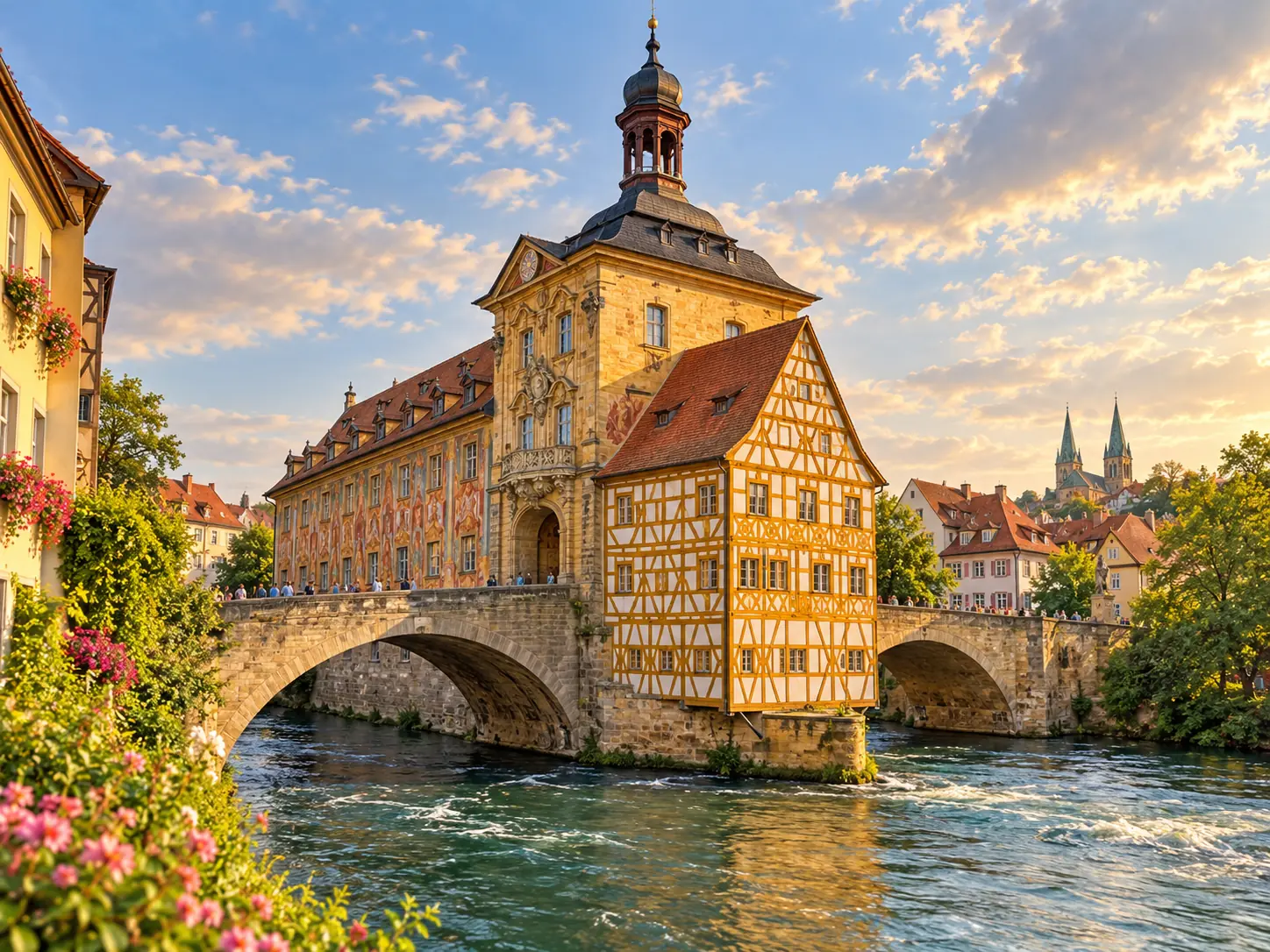
Bamberg brings together three distinct parts of a historic city: the island district beside the Regnitz, the cathedral hill and the market gardeners' district. Together they form a World Heritage ensemble, but each tells a different story about work and everyday life. We suggest two days to see beyond the famous town hall in the river. The first day can combine bridges and the cathedral hill; the second can explore urban horticulture at a gentler pace. For a short stay, choose fewer interiors and leave time for the city itself.
When to go
For a combination of architecture and gardens, we would choose late spring or summer. Autumn also suits shorter walks, but check the seasonal calendar of the Gärtner- und Häckermuseum particularly carefully: its regular opening season does not cover the whole year.
In winter, make the cathedral and accessible museum rooms your main stops. Save the riverside for daylight and allow an unhurried climb to the cathedral hill. Poor weather may make one longer indoor visit more enjoyable than another extended walk.
Things to see and do
Start the first day at the Old Town Hall. Look at its painted façades from the bridges, then continue to the riverside path Am Leinritt for views of the former fishermen's houses known as Little Venice. This is a useful stretch for a short walk without a museum timetable.
After a break, climb to the cathedral hill. Find the Bamberg Horseman in the cathedral, then explore the courtyard of the Alte Hofhaltung. Choose the New Residence if you want another interior; otherwise finish in its Rose Garden, overlooking the city.
Change the subject on day two with a visit to the gardeners' district. The Gärtner- und Häckermuseum explains how the house and garden formed parts of a working household. Fit your visit around its seasonal calendar and continue along public streets afterwards, without entering private courtyards. Any remaining time can go to a museum selected the previous day or another walk beside your favourite part of the river.
Practical tips
Our route treats the Old Town Hall as an exterior stop. When checked in November 2026, the official tourism website reported that its interior was not accessible. Check whether this has changed before travelling.
For the New Residence, compare the rooms currently open and the arrangements for individual apartments. The hillside part of this itinerary differs from the riverside walk. If you need to avoid steps, ask about the actual entrance and approach rather than judging accessibility by distance on a map.
Getting there and getting around
Bamberg is on the Munich–Nuremberg–Berlin railway route. Choose a train for your travel date, then use the VGN journey planner for regional trains and city buses.
On arrival, decide where to leave your luggage before starting the walk across bridges and up the hill. Drivers can compare accommodation parking with Park & Ride options. Check the conditions and operating arrangements of the chosen site separately, particularly if you will return late or travel on a Sunday.
Where to stay
For a first visit, we would consider the island district or the foot of the cathedral hill. Either can make it easier to split a day's walking with a rest or return outside in the evening. If rail arrival and departure matter most, compare addresses between the station and the centre.
Ask whether the room faces a busy street or an inner courtyard. In a historic building, clarify stairs and lift access before booking. If the car will stay at a more distant parking site, include the luggage walk in your arrival plan.
What to try
Rauchbier gets its smoky flavour from malt dried using wood smoke. Try a little if unfamiliar; a brewery tavern visit need not become a tasting.
Bamberger Hörnla can mean either a local potato variety or a buttery pastry. Check which is offered. For lunch, we suggest seasonal vegetable dishes, connecting the meal with the morning's walk through the gardeners' district.
Similar destinations

Germany
Berlin
Berlin brings together German history, museums, residential neighbourhoods and walks beside the river. For a first visi…
View details
Germany
Hamburg
Plan Hamburg around its water: give the warehouses and harbour their own day, then make separate time for the Alster, a…
View details
Germany
Dresden
Dresden brings together several sides of the city on the Elbe: Old Town architecture, museum collections and everyday l…
View details
Germany
Düsseldorf
Düsseldorf works well as a city break built around three different pleasures: looking at art, walking beside the Rhine …
View details